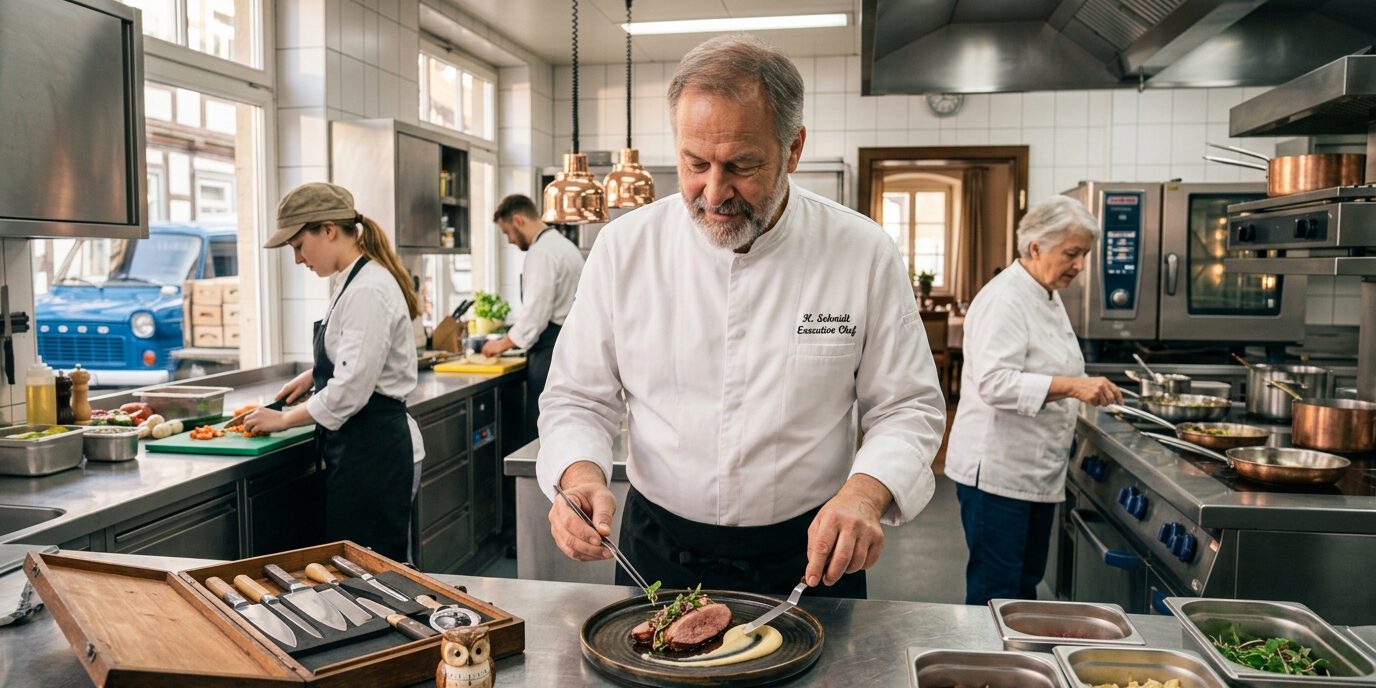
The head chef is the heart of every professional kitchen. Whether in a hotel, a restaurant, a canteen or a catering company, no service runs smoothly without an experienced leader at the pass. Businesses of every size in Germany are actively looking for qualified head chefs, which gives experienced cooks excellent opportunities. In this article you will learn what the job involves, which qualifications matter and how to find your next head chef job in Germany.
What does a head chef do?
A head chef does much more than cook. The role covers planning, organising and leading, from purchasing ingredients to the last plate leaving the kitchen. Typical responsibilities include:
- Menu planning – seasonal, well costed and matched to the concept of the house
- Team leadership – organising the kitchen brigade, rotas and training new staff
- Stock management – ordering, storage, supplier contact and food cost control
- Quality control – consistent taste, perfect presentation and adherence to recipes
- Hygiene and HACCP – documentation, temperature checks and team training
- Costing – pricing dishes, controlling costs and working closely with management
What qualifications do you need?
Most employers expect a completed chef training or an equivalent qualification from abroad, plus several years of experience, ideally as a sous chef or chef de partie. Leadership skills, resilience and a calm head during a busy service are just as important.
German is an advantage, especially when dealing with suppliers and authorities. In many international kitchens, however, good English, Italian or Romanian is enough as long as you can lead your team confidently. Knowledge of costing and stock management software is a clear plus.
Salary: what does a head chef earn in Germany?
A head chef’s salary depends heavily on the region, the size of the business and the level of responsibility. Smaller restaurants usually pay less than large hotels or fine-dining venues, and salaries in southern Germany and big cities such as Munich, Frankfurt or Hamburg tend to be higher. Many employers add supplements for Sunday and public holiday work, staff meals and sometimes accommodation. Always ask about the gross salary, working hours and extra benefits during the interview so you can compare offers fairly.
Where are head chefs needed?
- Hotels with restaurants, banqueting and breakfast service
- Italian, Mediterranean and international restaurants
- Traditional German inns (Gasthöfe)
- Catering and canteen kitchens with regular working hours
- Holiday hotels and resorts in the Alps or on the coast, often with seasonal contracts
Career path: from commis to head chef
The classic kitchen brigade career goes from commis de cuisine to demi chef and chef de partie, then sous chef and finally head chef. Ambitious chefs can go on to become an executive chef responsible for several kitchens, or move into a food and beverage manager role. Every step brings more responsibility and a higher salary.
Tips for your head chef application
- Show concrete results: team size, number of covers, menu changes, reduced food costs.
- Include photos of your dishes or a short menu you created.
- Be ready for a trial shift – it is common in Germany and your best chance to impress.
- Clarify accommodation, travel and start date in advance if you are coming from abroad.
How AS-Gastro-Consult helps you
AS-Gastro-Consult places head chefs, sous chefs and cooks with hotels and restaurants all over Germany. We know the employers personally, explain the conditions transparently and support you from the first message to your first day at work. Our service is free of charge for candidates.
See our current job offers or message us on WhatsApp: +49 163 501 95 12.